How to Swaddle a Baby: Step-by-Step Guide and Tips
Is the secret to a calm and happy baby a good old-fashioned swaddle? Knowing how to do one properly can make a huge difference in those first few months of life.


Medically Reviewed by Rhys Brooks, MD, FAAP on July 19, 2025 | Edited by Glow Editors
If your baby is having trouble calming down or you simply want to give him a greater sense of protection and comfort while he sleeps, many people believe swaddling is the way to go.
Read on to learn what swaddling is, what benefits and risks it might have, and tips to ensure you keep your baby safe while he’s wrapped up snugly in bed.
What is swaddling?
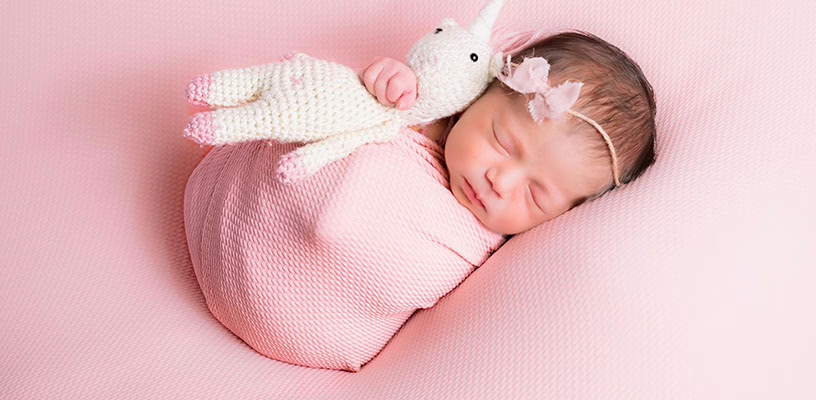
Swaddling is a way of securely wrapping your baby in a blanket. Aside from your baby’s head, which will remain exposed, the rest of his body will be snug within the blanket.
Swaddling has been practiced for centuries. Its proponents say it can:
- Provide a sense of security: After your baby is born, the great big world around him may feel intimidating. Swaddling recreates the snug and safe feeling of being in the womb.
- Improve your baby’s sleep: Because a swaddle feels like a warm hug, this soothing technique can give your baby a longer, more restful sleep.
- Regulate his temperature: When done right, swaddling keeps your baby warm, which will be helpful as his internal thermostat may not kick in right away after birth. 1
- Keep your baby calm: Swaddling can soothe an overstimulated or colicky baby and help to settle him down more effectively than many other techniques. 2
- Prevent his startle reflex: The Moro reflex (or startle reflex) is active in newborns in their first month. If your baby suddenly startles in his sleep or his head unexpectedly shifts positions, his limbs and neck will extend, causing him to wake up. Swaddling can help prevent this. 3
- Keep his hands away from his face: Swaddling can prevent your baby from scratching his face while sleeping.
When used with other soothing techniques like rocking and massage, swaddling helps your baby calm down and fall asleep much more easily.
Note that pediatricians and nurses also sometimes swaddle babies, too. Some studies suggest that swaddling can reduce distress during painful procedures like heel sticks. 4 (When used as a medical technique, this is known as a papoose.)
When can you start swaddling your baby?
You can start swaddling your baby from day one during naps and at bedtime. However, don’t do it right away. It’s important not to skip that all-important skin-to-skin contact with mom in the first hour after birth. 5
Skin-to-skin contact gives both you and your baby a lot of benefits. It helps the two of you strengthen your bond and: 6
- Stabilizes your baby’s heartbeat and breathing
- Makes your baby cry less
- Helps your baby gain more weight
- Improves breastfeeding
Can you swaddle a preemie?
Yes, in addition to all the other reasons to swaddle newborns, there are additional benefits for preterm babies. If you have a preemie, swaddling can improve his neuromuscular development and help him stay calm. 4
It may be more comfortable for your preterm baby to be swaddled with his hands placed together on his chest. This is similar to the position he was in in the womb and may be better for his development.
Before swaddling your preemie, give him a few extra hours of skin-to-skin contact after he’s born.
How to swaddle your baby in 5 steps
Are you ready to turn your newborn into an adorable baby burrito? Check out the 5 steps for safely swaddling your baby:
1. Position the blanket
Find a soft blanket that’s big enough to comfortably wrap around your baby. Make sure it isn’t too tiny, but also not so large that there’s extra fabric.
Lay the thin, square blanket on a flat surface. Position it in the shape of a diamond, with one end pointing towards you and one end directly away from you.
Take the pointed end furthest from you and fold it down over the blanket about six inches.
2. Put your baby on the blanket
Place your baby face-up on the blanket. His neck should be along the upper (flat and folded) edge. His body should extend straight down with his feet towards the pointed end of the blanket closest to you.
Make sure his face is above the top of the blanket. If the blanket happens to touch his cheek, it could activate what’s called the rooting reflex.
If you stroke your baby’s mouth or cheek, this instinctive reflex makes him turn his head toward you, seeking out the nipple to suck. A blanket rubbing the side of his face can have the same effect, and if there’s no breast to feed on, he may get frustrated and start crying. 3
3. Wrap the left side
In order to keep the wrap snug, your baby’s arms should be straight down alongside his body. Otherwise, you risk him wriggling free in the middle of the night.
To keep him secure, straighten his left arm by his side. Grab the left side of the blanket and pull it straight across his body. Alternatively, you can wrap it around his arm once and pull it across his body, which will help secure him if he’s on the stronger side and tends to escape easily.
Next, tuck the end of the blanket under the right side of his body, making sure to leave his right arm free. Make sure his blanket is snug but not too constricting.
4. Wrap the right side
Straighten your baby’s right arm down by his side. Take the blanket from that side and pull it across his body, then tuck it snugly underneath his left side.
To check if the swaddle is tight enough but not too tight, place your fingers between the blanket and your baby’s chest. There should be enough space for two or three fingers, but no more.
5. Secure the bottom
You should now have a bunch of fabric at the bottom. Twist or fold the fabric and tuck it behind your baby’s body.
Make sure the blanket is long enough so that your baby’s legs have enough room to move about freely within the swaddle. You don’t want his legs to be tightly secured or forced straight. Instead, they should be able to naturally bend up and outwards, similar to how they look when he’s lying on his back without the swaddle.
How safe is it to swaddle your baby?
You may be nervous about your little one being swaddled for naps and bedtime. It’s true that swaddling carries some risks, especially when you don’t do it properly, and it’s important to inform yourself of what they are so that you can avoid them.
Swaddling and the risk of SIDS
Sudden infant death syndrome (SIDS) is when a baby unexpectedly and suddenly dies. Your baby is most at risk of SIDS up until he’s 6 months old, though his first birthday is generally when you can stop worrying about SIDS altogether. While there’s no known cause for it, poor swaddling techniques and unsafe baby sleep practices may contribute to it. 7
When it comes to swaddling, always make sure your baby’s arms are properly secured (if you’re keeping them in the swaddle) and that the blanket isn’t loose enough to come undone in the middle of the night. This will decrease the chances of the blanket covering his face and inhibiting his breathing.
Stop swaddling your baby as soon as he’s able to roll over on his own, and always make sure to put him to sleep on his back. Because swaddling helps babies sleep more soundly, yours might not wake as quickly if he rolls face-down on the mattress. The swaddle could also prevent him from being able to change positions.
Swaddling and the risk of hip dysplasia
According to the International Hip Dysplasia Institute, your baby’s legs shouldn’t be tightly wrapped so that they point straight down and are pressed together. If you swaddle him with his hips and knees in an extended position, it may increase his risk of hip dysplasia (where a baby’s hip joint doesn’t develop properly) and even dislocation. 8
For this reason, always keep the bottom of the swaddle loose enough to allow your baby’s legs to bend up and outwards.
Tips for keeping your baby safe when swaddling
While swaddling is an effective way to calm a fussy baby or a light sleeper, it’s important to employ safe techniques:
- Put your baby on his back to sleep: The safest sleep position for a baby, swaddled or not, is on his back. This will cut down the risks of SIDS. 9
- Keep him level: To reduce the chances of rolling, place him on a firm, flat, and level sleep surface. 10
- Don’t put loose objects in the crib: Until their first birthday, when babies can safely sleep with a pillow, blanket, or stuffed animal, keep the crib free of them and other soft objects that increase the risk of suffocation. 10
- Make the swaddle just snug enough: A taut swaddle will keep your baby from startling himself awake. However, you don’t want it to be so tight that it restricts his breathing or binds his legs. 11
- Use a thin blanket: Thicker blankets not only increase the risk of suffocation if they loosen, they can overheat your baby as well.
- Avoid weighted items: Whether it’s a weighted swaddle, blanket, or other object, keep it out of the crib and away from your baby when he sleeps. 10
- Dress your baby lightly: There’s no need to dress your baby in multiple layers under the swaddle. Watch for the signs of overheating—if he’s sweating, rapidly breathing, and has flushed cheeks, he’s too hot in there. 5 11
- Stop swaddling when he starts to roll: Again, a swaddled baby who rolls onto his stomach is at an increased risk of suffocation. Once he starts working on this move, it’s time to stop swaddling. 11
What to do if your baby resists being swaddled
Although you know how beneficial swaddling can be for your baby, he might not. If he resists being swaddled, you can try: 12 13 14
- Gently massaging his arms: If your baby’s arms are tense and he won’t let you straighten them, gently massage and put pressure on them. This will encourage him to relax.
- Taking a break: If your baby is super squirmy and doesn’t want to settle down, put the swaddle aside and let him get all that extra energy out first.
- Using other calming techniques: If the swaddle alone doesn’t calm your baby, try other strategies. Place your hand on his chest, sway side by side with him in your arms, or make shushing noises. Another thing to try is putting him on his side or stomach until he settles and then placing him on his back to sleep.
- Swaddling with his arms out: If your baby wants more freedom than a classic swaddle will allow for, try swaddling with both of his arms outside of the wrap.
If your baby consistently resists swaddling, don’t force it. You can soothe and comfort him with other techniques, like putting up blackout curtains in his room and giving him a pacifier.
There are lots of alternatives if your baby doesn’t like being swaddled
Traditional swaddling isn’t for everyone. Some babies find it too restrictive and not calming at all, and many parents find it too difficult to swaddle their little ones for it to be worth it. If you still want to keep your baby secure and comfortable, try out alternatives like wearable blankets, velcro swaddles, or zip-up swaddles and sleep sacks. These alternatives are designed to mimic a swaddle by keeping the arms and legs close to the body, and are perfectly safe to use.
When it’s time to transition your baby out of the swaddle
As mentioned, stop swaddling your baby once he’s able to roll over. For some babies, this will happen around 2 months old, though it could happen as late as 3 months or 4 months old. 5 11
To test if he’s ready to transition out of swaddling, try it with one arm outside the swaddle.
If he sleeps soundly for a few nights that way, then try with both arms out. If he does well for a week or so, let him sleep freely in his pajamas or transition him to a sleep sack or suit if you’re concerned about keeping him warm.
If he fusses during this test or refuses to sleep with either or both of his arms free, then he’s not ready. Just be mindful of his mobility as he approaches that 2-month mark. As mentioned, once he shows signs of trying to roll, it’s no longer safe to swaddle him.
Final thoughts
Swaddling can be a great way to provide extra soothing and comfort for your baby while he sleeps. If you’re feeling anxious about swaddling or can’t quite seem to get the technique down, it’s okay. Lots of first-time parents struggle with it.
One thing you can do is get hands-on instruction. Ask your baby’s pediatrician or nurse for tips on how to do it. Another option is to take a newborn care class to learn all kinds of new skills, including swaddling!
Article Sources
- University of Rochester Medical Center. "Keeping Your Baby Warm" Retrieved October 31, 2025.
- Nemours KidsHealth. "Swaddling Your Baby" Retrieved October 31, 2025.
- HealthyChildren.org. "Newborn Reflexes" Retrieved October 31, 2025.
- Pediatrics. "Swaddling: A Systematic Review" Retrieved October 31, 2025.
- HealthyChildren.org. "How to Keep Your Sleeping Baby Safe: AAP Policy Explained" Retrieved October 31, 2025.
- HealthyChildren.org. "Skin-to-Skin Contact: How Kangaroo Care Benefits Your Baby" Retrieved October 31, 2025.
- Safe to Sleep. "What Are Other Sleep-Related Infant Deaths?" Retrieved October 31, 2025.
- International Hip Dysplasia Institute. "Understanding Hip Dysplasia" Retrieved October 31, 2025.
- HealthyChildren.org. "Putting Back-Sleeping Concerns to Rest" Retrieved October 31, 2025.
- Safe to Sleep. "Safe Sleep Environment for Baby" Retrieved October 31, 2025.
- HealthyChildren.org. "Swaddling: Is it Safe for Your Baby?" Retrieved October 31, 2025.
- Pathways. "Swaddling Not Going Swell? Here are Some Alternatives." Retrieved October 31, 2025.
- HealthyChildren.org. "Good Night, Sleep Tight: How to Swaddle Your Baby" Retrieved October 31, 2025.
- Centers for Disease Control and Prevention. "Helping Babies Sleep Safely" Retrieved October 31, 2025.