Postpartum Preeclampsia: What It Is, Symptoms, and Treatment
While you’ll undoubtedly be busy with your demanding newborn, don’t forget to look after your own health, too. One rare but serious condition to watch out for is postpartum preeclampsia.


Medically Reviewed by Monica Lee, MD, FACOG on November 6, 2025 | Edited by Glow Editors
You might be familiar with the dangerous pregnancy complication known as preeclampsia. Unfortunately, this condition can also strike during the postpartum period.
Read on to learn what postpartum preeclampsia is, how to spot the signs of it, and what you’ll need to do if your doctor catches it.
What is postpartum preeclampsia?
Postpartum preeclampsia is a serious complication that affects women after they give birth. It causes high blood pressure (hypertension) and excess protein in urine.
It can affect anyone who has recently given birth, even moms who had perfectly normal blood pressure throughout their entire pregnancies.
Postpartum preeclampsia usually shows up within 48 hours of delivery, although it can sometimes develop up to six weeks after your baby is born (this is known as late-onset postpartum preeclampsia). 1
If you don’t get it treated, postpartum preeclampsia can lead to severe complications like:
- Seizures (postpartum eclampsia)
- Strokes
- Damage to your vital organs
What are the symptoms of postpartum preeclampsia?
Since postpartum preeclampsia can progress quickly, you’ll need to keep an eye out for the telltale signs.
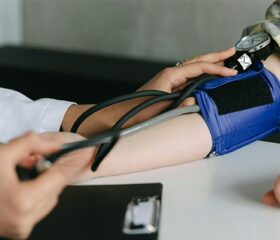
First off, postpartum preeclampsia causes high blood pressure. This may set in while you’re still at the hospital, but if you’re monitoring yours at home, let your doctor know if you have a reading of 140/90 mmHg or higher.
You should also get in touch with your doctor straight away if you experience: 2
- Severe headaches: Watch out for a persistent, throbbing headache similar to a migraine that doesn’t improve with time or respond to common pain relievers.
- Vision changes: Many women with this condition experience changes like blurry vision, seeing spots or floaters, sensitivity to light, or even a temporary loss of vision.
- Upper abdominal pain: You might feel a sharp pain under your ribs, usually on the right side (the right upper quadrant).
- Swelling (edema): While some swelling during postpartum is normal, let your doctor know if you have severe or sudden swelling, especially in your hands and face.
You could also experience symptoms like nausea, vomiting, shortness of breath, decreased urination, or even seizures.
Whether you have just one of these symptoms or multiple, trust your instincts and get in touch with your doctor as soon as possible.
What causes postpartum preeclampsia?
While experts still aren’t totally sure what causes postpartum preeclampsia, one theory suggests that the fluid shifts that happen in your body after giving birth may play a role in the rise of blood pressure in the days following delivery.
Who is at risk of postpartum preeclampsia?
Many of the risk factors for postpartum preeclampsia are similar to those for preeclampsia during pregnancy.
For instance, you’re more likely to have postpartum preeclampsia if you have a history of high blood pressure, regardless of whether it developed during your pregnancy or you had it beforehand.
You also have a higher risk if you:
- Are obese (you have a body mass index of 30 or more)
- Were pregnant with multiples (twins, triplets, or more)
- You have a preexisting health condition (e.g., diabetes, kidney disease, or an autoimmune disorder)
- Are under 20 or over 35 3
- Have a family history of preeclampsia
Although these factors do increase your chances of contracting postpartum preeclampsia, anyone can be at risk, whether you previously suffered from high blood pressure or not. 2
People of certain races may be more at risk of preeclampsia
Unfortunately, racial disparities exist when it comes to preeclampsia (of all types, not just postpartum preeclampsia). One study found that US-born Black women were more likely to suffer from it than white or Hispanic women. 4 The reasons for this aren’t clear, although the study’s lead researcher suggested several possibilities, including corresponding disparities in access to healthcare. 5
How do doctors diagnose preeclampsia?
During your hospital stay after delivery, your doctor will monitor your vital signs closely. (If you develop symptoms after returning home, you’ll need to get in touch with your doctor right away, and you may be readmitted to the hospital.)
Your doctor will keep an eye on your blood pressure and analyze your urine to check for excess protein (proteinuria), which is one of the telltale signs of postpartum preeclampsia. They’ll also perform blood tests to assess your platelet count and check how well your liver and kidneys are functioning.
These tests can also check for another rare but serious condition known as HELLP syndrome (more on this below), which can occur up to seven days after you give birth. 6
How doctors treat postpartum preeclampsia
Postpartum preeclampsia doesn’t go away on its own; you’ll need to get immediate medical attention if your doctor catches it.
Depending on the severity of your symptoms, you may need to be hospitalized so your doctor can monitor you closely. Your doctor will try to lower your blood pressure and prevent serious complications, particularly seizures.
Specifically, they’ll probably treat your postpartum preeclampsia with: 1
- Blood pressure medications: Your doctor will give you antihypertensive drugs that will lower your blood pressure to a safe level.
- Anti-seizure medication: Your doctor may inject magnesium sulfate to prevent eclamptic seizures (one of the more common complications that postpartum preeclampsia causes).
- Blood thinners: Your doctor may also prescribe anticoagulants to reduce your risk of blood clots.
While you can probably still breastfeed your baby while taking these medications, you’ll need to run that by your doctor first.
How long does it take to recover from postpartum preeclampsia?
The good news is that, with the right treatment and early detection, you can often recover from postpartum preeclampsia fairly quickly. It may take anywhere from a few days to several weeks for your blood pressure to drop to a safe level, which will lower your risk of other complications. 1
Still, recovering from postpartum preeclampsia while also healing from childbirth and caring for a newborn is no easy task. You’ll need to prioritize your own well-being while you recover.
During your recovery, be sure to:
- Ask for help: Don’t be afraid to ask your partner, family, and friends for help when you need it. Be specific about what you need, whether that means asking someone to watch your baby, pitch in with household chores, or take you to your checkups.
- Get enough rest: Give yourself plenty of time to rest and put all non-essential tasks on the back burner. While resting with a newborn might be easier said than done, take advantage of any time you can get.
- Look after your mental health: The stress of a medical complication on top of the hormonal shifts of the postpartum period can be overwhelming. Talk to your doctor if you feel anxious, depressed, or unable to cope, as these may be signs of postpartum depression, which requires treatment.
Throughout your recovery, stay in contact with your doctor and attend all your follow-up appointments so they can monitor your blood pressure and ensure you’re healing as expected.
What are the potential complications of postpartum preeclampsia?
Without treatment, postpartum preeclampsia can lead to severe, life-threatening health events.
The risks associated with postpartum preeclampsia can also escalate more quickly and be more serious than those that appear if you develop the condition during pregnancy.
Potential complications include: 1
- Postpartum eclampsia: As mentioned above, this is when preeclampsia progresses and causes seizures. Eclampsia can cause permanent damage to your brain, liver, and kidneys.
- HELLP syndrome: This is a rare but life-threatening liver and blood-clotting disorder. HELLP stands for Hemolysis (the destruction of red blood cells), Elevated Liver enzymes, and Low Platelet count. 6
- Stroke: If you have continuously high blood pressure, this can interrupt blood flow to the brain, causing a stroke.
- Pulmonary edema: This dangerous condition occurs when excess fluid builds up in your lungs, making it hard to breathe.
- Thromboembolism: With postpartum preeclampsia, you’re also more at risk of a venous thromboembolism, which is a blood clot that blocks one of your blood vessels. 7
Moreover, women who experience preeclampsia are more at risk of developing chronic high blood pressure and cardiovascular disease later in life.
Can you prevent postpartum preeclampsia?
Unfortunately, there’s no surefire way to prevent postpartum preeclampsia.
Your best bet is detecting it early on to avoid serious complications. This makes it all the more important to know the symptoms and risk factors.
If your doctor believes you’re at risk of preeclampsia, they might suggest taking a low dose of aspirin (81 milligrams) daily. 8
Otherwise, you should try to stay moderately active and eat a diet full of leafy greens, whole grains, and lean protein. This will help control your weight and blood pressure and lower your overall risk.
Final thoughts
Although you’ll be understandably busy caring for your newborn baby, your own health is just as important.
Make sure you’re aware of the signs of postpartum preeclampsia and never hesitate to get in touch with your doctor if something feels off. If your doctor catches it early, your chances of overcoming the condition are very high.
Article Sources
- Cleveland Clinic. "Postpartum Preeclampsia" Retrieved November 10, 2025.
- Preeclampsia Foundation. "Postpartum Preeclampsia" Retrieved November 10, 2025.
- Maternal and Child Health Journal. "Maternal age and risk of labor and delivery complications" Retrieved November 10, 2025.
- JAMA Network Open. "Nativity-Related Disparities in Preeclampsia and Cardiovascular Disease Risk Among a Racially Diverse Cohort of US Women" Retrieved November 10, 2025.
- Johns Hopkins Medicine. "U.S.-Born Black Women at Higher Risk of Preeclampsia than Foreign-Born Counterparts; Race Alone Does Not Explain Disparity" Retrieved November 10, 2025.
- Cleveland Clinic. "HELLP Syndrome" Retrieved November 10, 2025.
- Frontiers in Cardiovascular Medicine. "Preeclampsia and Venous Thromboembolism: Pathophysiology and Potential Therapy" Retrieved November 10, 2025.
- American College of Obstetricians and Gynecologists. "Low-Dose Aspirin Use for the Prevention of Preeclampsia and Related Morbidity and Mortality" Retrieved November 10, 2025.